
BYU Engineering Capstone Program (2026–2027)
| Program Overview | ||
|---|---|---|
| Program Title | BYU Engineering Capstone Program (2026–2027) | |
| Organization | Brigham Young University (BYU) | |
| # of Students Enrolled |
0
|
|
| # of Projects Running |
0 Project/s Added (of 50 Projects Expected)
|
|
|
Program Timeline Project Duration |
Start Date: 09/02/26 End Date: 04/14/27 7 months |
|
| Collaboration Overview | ||
|---|---|---|
| About Students |
All Capstone students are in the final year of their accredited undergraduate programs. Across all tracks, they bring:
Teams are comprised of students from various and multiple engineering disciplines as project relevant including:
Student Level: Bachelor Degree Student Time Commitment: Full Time Team Structure: 5 - 7 |
|
| Program Goals | Industry partners benefit from a rigorous, structured engineering experience where students:
|
|
| Format Structure |
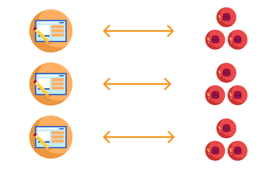
Multiple Projects Multiple Teams |
|
| Format Title | Capstone | |
| Format Description |
Team Structure:
Engagement Expectations: Sponsors typically commit ~1 hour/week for guidance and feedback. Student teams meet independently 8–10 hours per week. Process:
|
|
| Benefits For Industry Partners | The BYU Engineering Capstone Program is a premier year-long applied innovation experience that engages senior engineering and cybersecurity students in solving meaningful real-world challenges. Each project is supported by faculty coaches, technical experts, and BYU’s extensive engineering facilities. Every project is staffed by a dedicated team of 5–7 senior students who operate like a professional engineering consulting group, designing, prototyping, analyzing, testing, validating, and documenting solutions that meet sponsor needs. Benefits for Participating Industry Partners include:
Innovation & Problem Solving
Access to BYU Engineering Talent
Professional Deliverables (depending on track)
Brand Exposure
|
|
| Project Modality | Fully Remote | |
| Industry Partner Requirements to Participate | ||
|---|---|---|
| Project Topics | Artificial Intelligence & Machine Learning Cybersecurity Data Management Electrical Engineering Entrepreneurship Information Technology (IT) Innovation Inventory Management Mechanical Engineering Operations Product Design & Development Purchasing, Logistics, Supply Chain Quality Control Reporting, Financial Planning & Analysis Research & Development Research, Analysis, Evaluation Sales & Business Development Software Design & Development Strategic Planning Sustainability & ESG Technology Commercialization UX/UI & Human-Centered Design | |
| Target Industries | Aerospace & Defense Agriculture & Farming Arts & Recreation Biotech & Pharmaceuticals Computers & Hardware Construction, Repair & Maitenance Consulting & Professional Services Consumer Products & Services Education & Ed-Tech Energy & Utilities Fashion & Apparel Finance & Investment Food & Beverage Government Health Care & Life Sciences Insurance Manufacturing & Industrial Media, Publishing & Content Natural Resources Non-Profit & Social Impact Public Works Real Estate Restaurants, Bars & Food Services Retail & E-Commerce Semiconductor Software, AI & Data Sports & Entertainment Telecommunications Transportation & Logistics Travel & Tourism | |
| Skills & Expertise | Automation C/C++ CAD (SolidWorks) Cloud Security CNC Communication Control Systems Data Analysis DFM/DFA Digital Forensics Documentation & Reporting Embedded Systems Fluid Mechanics FPGA Design Governance Risk & Compliance Identity & Access Management Incident Response LabVIEW Lean Log Analysis Machine Design MATLAB Mechatronics Microcontroller Programming Network Defense PCB Layout & Fabrication Penetration Testing Project Management Python Rapid Prototyping Red/Blue Teaming Risk Management Robotics Secure Coding SIEM Tools Simulation Tools Simulink Six Sigma SPC Stakeholder Engagement Systems Modeling Technical Writing Testing & Validation Thermodynamics Threat Modeling Vulnerability Assessment Wireless Communication | |
| Location Information & Preferences |
Located Anywhere |
|
| Sponsorship |
Sponsorship Requested (Mandatory):Pre-Revenue Startup an exact contribution amount of $22000.0 Growth Startup an exact contribution amount of $22000.0 Small to Medium Business an exact contribution amount of $22000.0 Large Enterprise an exact contribution amount of $22000.0 Government Organization an exact contribution amount of $22000.0 Non-Profit an exact contribution amount of $22000.0 |
|
| Compensation |
No Compensation Required |
|
| Other Requirements |
Sponsorship Fee: $22,000 per project (mandatory). Covers:
Sponsor Responsibilities:
Intellectual Property:
Sponsors retain full rights to all deliverables, documentation, code, prototypes, and IP. |
|
| Expected Time Commitment For Project Managers | 1 Hour per week | |
| Key Program Dates | Due Date |
|---|---|
|
Official Program End
We’ll find a time on this day for you to meet with the students to wrap up your project.
|
Apr 14 2026 |
|
Proposal Application Deadline
Final date for Industry Partners to express interest in participating.
|
Jul 31 2026 |
|
Finalize Project Details
Educators and Industry Partners finalize project charters, legal documents, and background materials.
|
Aug 14 2026 |
|
Projects Launch
We’ll find a time on this day for you to meet with the students to kick off your project.
|
Sep 04 2026 |
Program Timeline
|
Due Date
|
Activities |
Deliverables
|
Status
|
Action |
|---|
Projects
| Project | Organization | Topics |
|---|
Program Managers
| Name | Organization |
|---|---|
| Brady Davies | Brigham Young University (BYU) |
| Lisa Barrager | Brigham Young University (BYU) |
| Allyson Gibson | Brigham Young University (BYU) |
Teams
| Team Name | Project Name | Team Members |
|---|---|---|
| No Teams Available |