
BYU Cybersecurity Engineering Capstone Program (2026–2027)
| Program Overview | ||
|---|---|---|
| Program Title | BYU Cybersecurity Engineering Capstone Program (2026–2027) | |
| Organization | Brigham Young University (BYU) | |
| # of Students Enrolled |
0
|
|
| # of Projects Running |
0 Project/s Added (of 50 Projects Expected)
|
|
|
Program Timeline Project Duration |
Start Date: 09/03/26 End Date: 04/15/27 7 months |
|
| Collaboration Overview | ||
|---|---|---|
| About Students |
Students are in their final year of BYU’s ABET-accredited Cybersecurity degree program. They bring experience with:
Each student team is coached by faculty and external mentors with industry expertise.
Student Level: Bachelor Degree Student Time Commitment: Full Time Team Structure: 5 - 7 |
|
| Program Goals | Cybersecurity capstone students will:
|
|
| Format Structure |
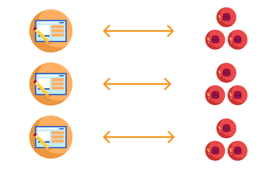
Multiple Projects Multiple Teams |
|
| Format Title | Capstone | |
| Format Description | The Manufacturing Track of the BYU Mechanical Engineering Capstone Program offers organizations the opportunity to collaborate with a senior engineering team on real-world challenges focused on production systems, factory layout, automation, quality control, and cost reduction. This is a hands-on, year-long consulting engagement that results in tangible process improvements, documentation, and implementation-ready recommendations. Projects are supported by both faculty advisors and experienced industry coaches.
Benefits to Sponsors:
|
|
| Benefits For Industry Partners |
Innovation & Problem Solving
Access to BYU Engineering Talent
Professional Deliverables (depending on track)
Brand Exposure
|
|
| Project Modality | Fully Remote | |
| Industry Partner Requirements to Participate | ||
|---|---|---|
| Project Topics | Artificial Intelligence & Machine Learning Corporate Social Responsibility Crisis and Disaster Management Customer Service & Account Management Cybersecurity Data Management Entrepreneurship Information Technology (IT) Innovation Inventory Management Legal, Regulatory, Compliance Market Research Operations Product Design & Development Purchasing, Logistics, Supply Chain Reporting, Financial Planning & Analysis Research & Development Research, Analysis, Evaluation Software Design & Development Technology Commercialization Training & Development Urban Planning UX/UI & Human-Centered Design | |
| Target Industries | Aerospace & Defense Agriculture & Farming Arts & Recreation Biotech & Pharmaceuticals Computers & Hardware Construction, Repair & Maitenance Consulting & Professional Services Consumer Products & Services Education & Ed-Tech Energy & Utilities Fashion & Apparel Finance & Investment Food & Beverage Government Health Care & Life Sciences Insurance Manufacturing & Industrial Media, Publishing & Content Natural Resources Non-Profit & Social Impact Public Works Real Estate Restaurants, Bars & Food Services Retail & E-Commerce Semiconductor Software, AI & Data Sports & Entertainment Sustainability & Climate Telecommunications Transportation & Logistics Travel & Tourism | |
| Skills & Expertise | Active Directory Blue Teaming Cloud Security Code Review Digital Forensics Firewall Configuration Governance Risk and Compliance Identity and Access Management IDS and IPS Incident Response Linux Administration Log Analysis Network Monitoring Penetration Testing Presentation Design Project Management Red Teaming Risk Management Secure Coding Security Awareness SIEM Tools Social Engineering Testing Technical Documentation Threat Modeling Vulnerability Assessment Windows Administration | |
| Location Information & Preferences |
Located Anywhere
|
|
| Sponsorship |
Sponsorship Requested (Mandatory): |
|
| Compensation |
No Compensation Required |
|
| Other Requirements |
$22,000 sponsorship fee per project (Covers faculty mentoring, tools, licenses, and infrastructure) Sponsors retain full ownership of all deliverables and intellectual property Projects must present a defined challenge or opportunity related to cybersecurity strategy, tooling, policy, or risk Sponsors must assign a technical point of contact for monthly touchpoints Final deliverables typically include:
|
|
| Expected Time Commitment For Project Managers | 1 Hour per week | |
| Key Program Dates | Due Date |
|---|---|
|
Application Deadline
|
Jul 04 2025 |
|
Projects Finalized
|
Aug 01 2025 |
|
Student Teams Finalized
|
Aug 22 2025 |
|
Projects Launch
|
Sep 03 2025 |
Program Timeline
|
Due Date
|
Activities |
Deliverables
|
Status
|
Action |
|---|
Projects
Filters
| Project | Organization | Topics |
|---|
Program Managers
| Name | Organization |
|---|---|
| Brady Davies | Brigham Young University (BYU) |
Teams
| Team Name | Project Name | Team Members |
|---|---|---|
| No Teams Available |